
Key Takeaways
- Microneedling may show visible hair-density changes within 3 to 6 months, especially when paired with a topical treatment like minoxidil
- Low-level laser therapy generally requires 16 to 26 weeks of consistent use before results appear, since it works gradually on follicle activity
- Laser therapy is typically painless, while microneedling can cause short-lived redness, tenderness, or minor swelling that fades within a few days
- A dermatologist can confirm the type and cause of hair loss first, since neither treatment works the same way for every case
- The right pick between the two often comes down to tolerance for mild discomfort and the ability to stick with a routine over several months
Comparing microneedling and low-level laser therapy often comes down to one simple question: how soon can changes actually be seen? Both are minimally invasive options people turn to for early pattern hair thinning, and both work by waking up follicles that have slowed down or gone dormant. The catch is that they operate on very different clocks, and understanding those timelines ahead of time can prevent frustration a few months in. A detailed breakdown of laser therapy vs microneedling for hair loss, including results, cost, and side effects, lays out what to expect at each stage so expectations stay realistic from the start.
Which Regrows Hair Faster?
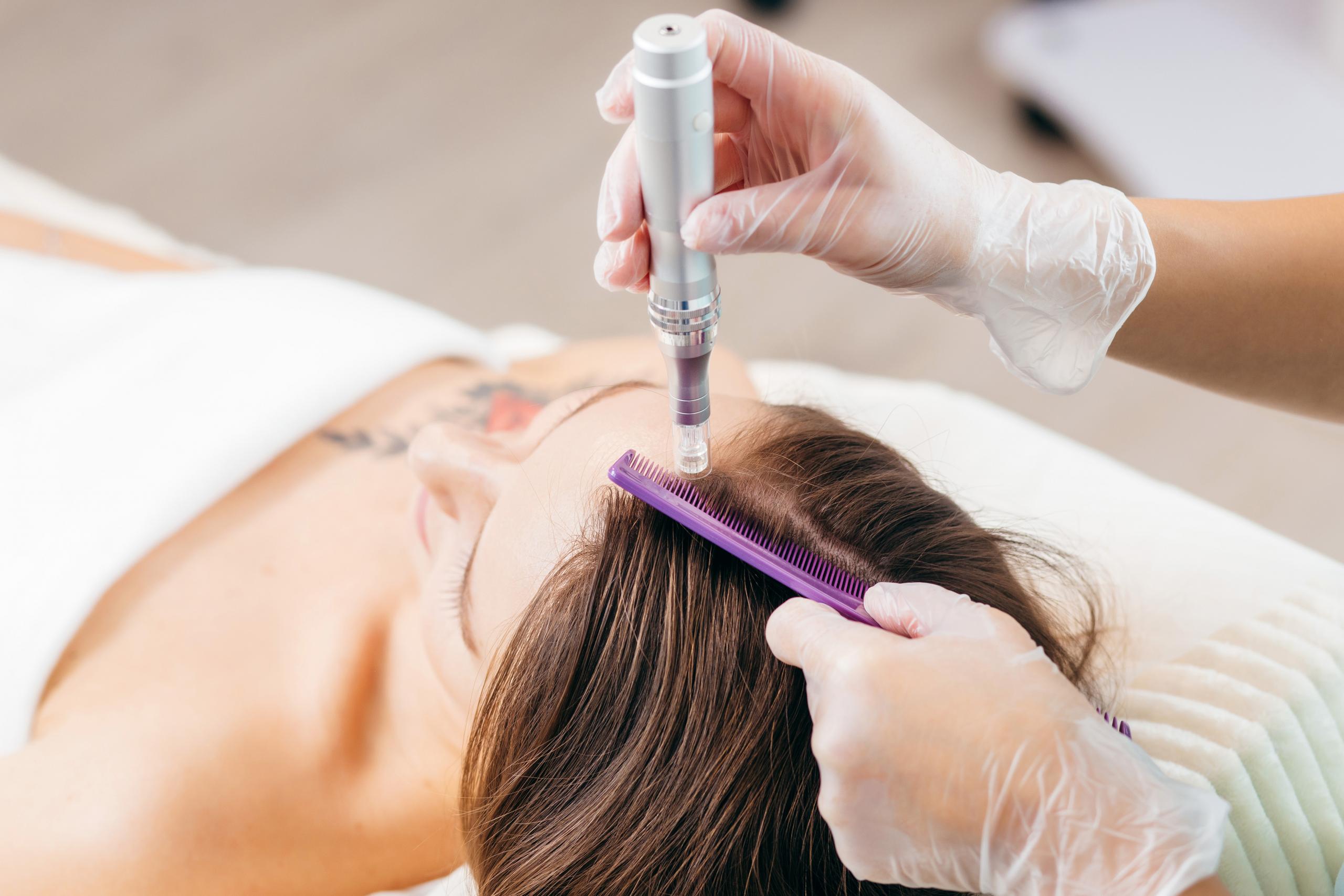
Microneedling tends to produce the quicker early wins. Visible changes in hair density have been reported within 3 to 6 months, and that timeline often shortens when microneedling is combined with a topical treatment such as minoxidil. The tiny punctures created during a session do double duty: they trigger the body’s own repair response and help topical products absorb more deeply into the scalp.
Laser therapy plays a longer game. Most people using low-level laser therapy (LLLT) consistently see results after 16 to 26 weeks. That’s a few months beyond the earliest microneedling results, but the payoff tends to be steady, long-term improvement in density rather than a quick burst of change. Neither treatment works overnight, and for both, the biggest factor separating success from disappointment is simply sticking with the plan.
Microneedling’s Regrowth Timeline
A typical microneedling course for hair loss involves several sessions spaced two to four weeks apart, with some protocols in reviewed literature ranging from once every two weeks to once a month. Each appointment itself is short, often wrapping up in under an hour, but the real work happens in the weeks after as the scalp heals and follicles respond to the micro-injury.
Why Minoxidil Speeds Up Results
Pairing microneedling with minoxidil appears to accelerate what either treatment could do alone. Dermatologists note that in men aged 20 to 35 with mild or moderate hereditary hair loss, using minoxidil twice daily alongside weekly microneedling produced significantly more hair growth after 12 weeks than using minoxidil alone. The needles create tiny channels that let the topical treatment penetrate deeper into the scalp, rather than sitting on the surface. Research on combination approaches echoes this pattern, showing the pairing outperforms either method used solo.
What to Expect Between Sessions
Between sessions, the scalp needs time to recover before the next round of micro-injury. A few patterns tend to show up during this window:
- Mild redness or tenderness at the treatment site, usually settling within 24 to 48 hours
- A noticeable reduction in shedding before any new growth becomes visible
- Gradual improvements in hair thickness that build with each additional session rather than appearing all at once
It’s also worth noting that minoxidil application is typically paused for about 24 hours after a session, along with harsh shampoos, scalp scrubs, or alcohol-based tonics, to give the scalp a clean window to heal.
Laser Therapy’s Regrowth Timeline
Low-level laser therapy relies on red or near-infrared light to stimulate follicle cells at a cellular level, a process sometimes called photobiomodulation. Sessions themselves tend to run short, often 8 to 15 minutes, and are recommended two to three times a week. Several treatments per week over many months are often needed before any hair growth becomes noticeable, and even then, some users see thicker, fuller hair while others may not see regrowth at all.
Why Consistency Matters Most
LLLT does not work through a single dramatic session the way microneedling can. Its effect builds gradually, shifting hair follicles from a resting phase into an active growth phase over repeated exposures. Skipping sessions or using the device inconsistently tends to blunt results, which is why the treatment is often described as more of a long-term commitment than a quick fix. For anyone comparing timelines, this is the central trade-off: microneedling may show early movement sooner, while laser therapy asks for patience and a steady routine stretched across several months.
Comparing Side Effects and Tolerance
Tolerance for mild discomfort plays a real role in choosing between these two options. Laser therapy is generally painless, with most people noticing only mild warmth or tingling during a session. Microneedling asks for a bit more trade-off: short-lived redness, scalp sensitivity, minor swelling, or even pinpoint bleeding can show up afterward, typically resolving within a few days.
Infection is the main risk tied to microneedling, and it’s largely preventable. Using sterile, properly maintained equipment and following aftercare guidance reduces that risk considerably. Anyone considering microneedling should confirm that whoever performs the treatment uses sterile, single-use needles and proper technique, since skipping that step is where most complications originate.
Getting the Right Diagnosis First
Neither treatment works as a universal approach across all kinds of hair thinning, which makes a proper diagnosis the real starting point. A dermatologist can run tests to identify what type of hair loss is actually happening and what’s causing it, rather than guessing based on symptoms alone.
Not Every Hair Loss Type Responds
Cleveland Clinic dermatology resident Dr. Taylor Bullock cautions that microneedling only helps with certain types of hair loss. Research supports its use for androgenetic alopecia (pattern baldness) and some cases of alopecia areata, but it won’t address hair loss tied to other causes. Hair loss from an iron deficiency, for example, calls for treating the deficiency itself rather than relying on microneedling to fix it. Getting that diagnosis first saves time, money, and the disappointment of trying a treatment that was never going to work for the underlying issue.
Professional vs At-Home Devices
The gap between in-office and at-home microneedling devices is bigger than it might seem. Professional devices use needles long enough to reach the hair follicle itself, while at-home devices typically use much shorter needles, often less than a tenth the length used in a dermatologist’s office. At-home dermarollers might help a topical medication absorb slightly better, but they aren’t built to trigger the same collagen and wound-healing response as a medical-grade device. Medical-grade tools should only be handled by a licensed, appropriately trained provider, since using one without training carries real risk of pain, skin damage, or infection.
Laser devices follow a similar professional-versus-home split. In-clinic treatments use higher-powered equipment for more controlled, intensive sessions, while at-home laser caps and combs operate at lower power and rely on consistent long-term use to get anywhere close to similar results.
The Timeline Verdict: It Depends on You
There’s no single winner between microneedling and laser therapy regarding speed. Microneedling tends to show early movement faster, particularly when paired with a topical like minoxidil, while laser therapy builds results more gradually but can support longer-term density improvements with regular use. The right choice often comes down to three personal factors: the specific diagnosis behind the hair thinning, the willingness to commit to a consistent schedule for several months, and comfort with the mild, temporary side effects each option carries.
A scalp-support routine alongside either treatment can also make a difference in how the hair looks and feels during the process. Products formulated with ingredients like caffeine, biotin, and castor oil are designed to support scalp health and reduce shedding, which can complement whichever regrowth treatment ends up being the better fit. Whichever path gets chosen, pairing it with consistent scalp care products built for everyday use can help support the results along the way.
Trybello LLC
40 SW 13th St
Ste 902
Miami
Florida
33130
United States


