
INNER MONGOLIA, CN / ACCESS Newswire / September 15, 2026 / The Tengger Desert, China’s fourth-largest desert, receives less than 200 mm of precipitation annually, while evaporation exceeds 3,000 mm. Summer surface temperatures often rise above 50°C, and the region experiences more than 50 days of gale-force winds-Force 8 or higher-each year. Sand dunes can advance by around 10 meters annually, threatening to bury roads and farmland. Since 2021, the Alxa League Oasis Afforestation Center has maintained a presence here, carrying out desertification control and sand stabilization. The center now protects more than 100 mu (about 6.7 hectares) of Hedysarumscoparium and 40,000 Russian olive trees (Elaeagnus angustifolia), forming a green barrier along the edge of the desert.
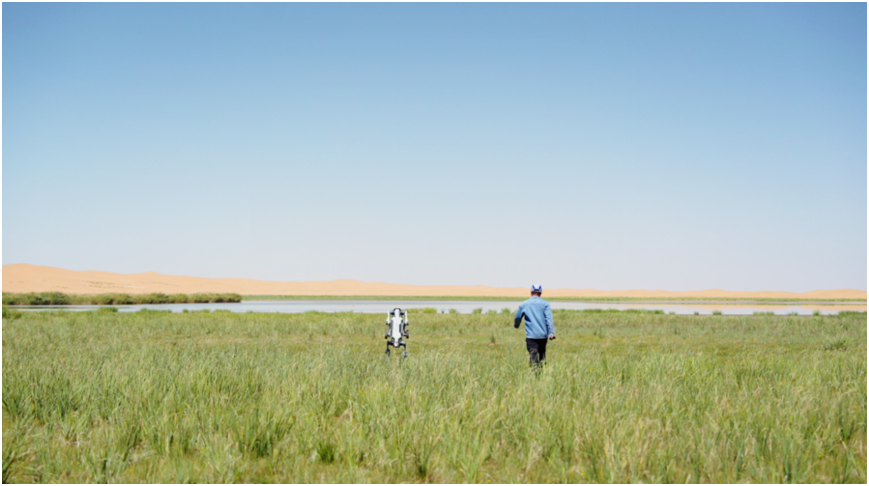
Summer is the most demanding season for patrolling the Hedysarumscoparium plantation. Extreme heat, difficult travel through loose sand, and nighttime grazing by wild animals place a heavy burden on frontline rangers. Seeking a better solution, the Alxa League Oasis Afforestation Center invited DEEP Robotics to explore how robotic technology could strengthen its conservation efforts. Guided by its vision of “Creating a Better Life with Robots and AI,” DEEP Robotics brought its newly launched Lynx M20S wheeled-legged robot into the desert to support patrols and sand-control work-and to demonstrate a smarter model for managing desert oases.
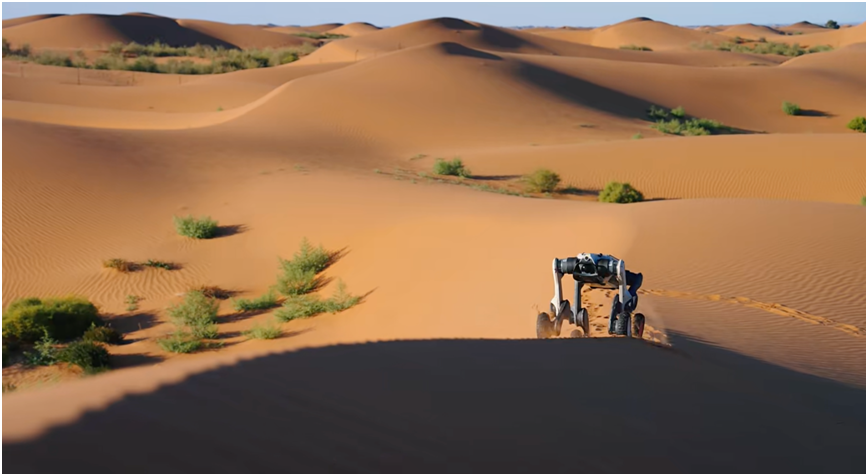
Protecting a Fragile Green Barrier: Heat, Shifting Sand, and Wildlife
Responsibility for protecting more than 100 mu of Hedysarumscoparium and 40,000 Russian olive trees rests with only a small team of resident rangers. The plantation is surrounded by loose sand that conventional vehicles struggle to cross, forcing each ranger to patrol 15-20 kilometers a day on foot. In midsummer, heat radiates from the ground, making prolonged outdoor work physically exhausting and increasing the risk of heatstroke. Beyond the physical strain, rangers must also contend with the isolation of patrolling an immense desert landscape, accompanied only by the wind and shifting sand.
Night patrols are even more difficult. Wild asses, bharals, and rabbits frequently enter the plantation to feed on young plants and disturb their roots. As a result, the survival rate of newly planted seedlings can fall below 40%, undoing months of painstaking work in a single night.
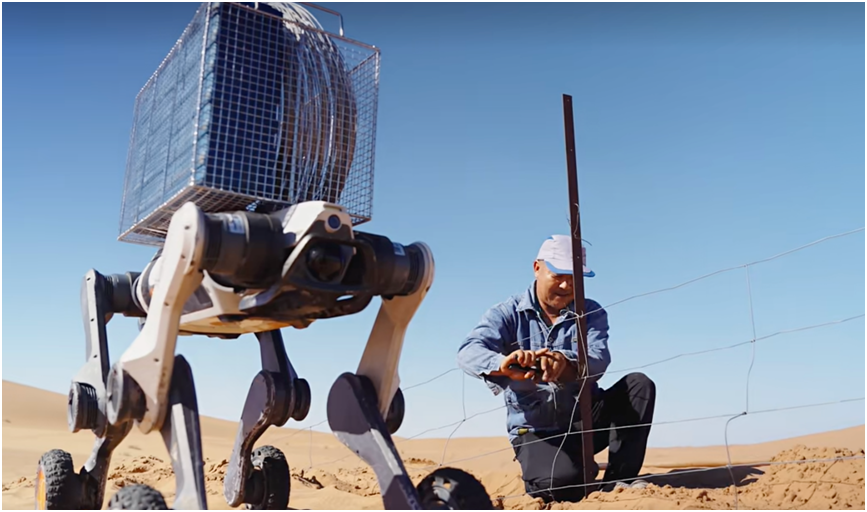
Maintaining the protective fencing is another persistent challenge. Under the traditional patrol model, rangers can often do little more than record damage when they discover it, returning later with the tools and materials needed for repairs. In the meantime, the damage-and the resulting losses-may continue to spread. The plantation represents years of effort, from planting seedlings in spring to tending them through the summer heat. Yet with limited manpower, gaps in coverage are unavoidable.
“Three Days of Work, Done in One”
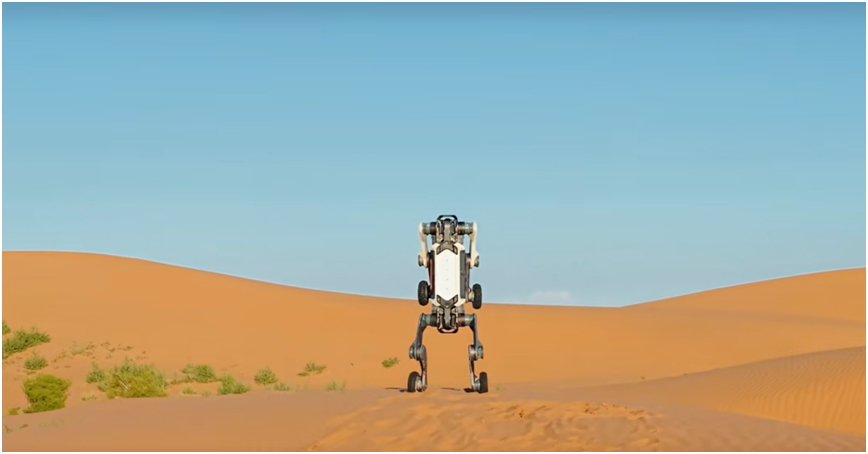
Until now, daily patrols and the transport of tools and supplies across the vast sandy plantation have depended almost entirely on manual labor. Long-distance trekking and carrying heavy loads consume considerable time and energy, limiting the efficiency of routine management. Deployed in the Tengger Desert, the DEEP Robotics Lynx M20S can reach a top speed of 9 m/s. It combines the speed of wheeled movement with the obstacle-crossing capability of legged locomotion, giving it strong all-terrain mobility. These capabilities allow the robot to adapt to the demanding conditions of a sandy plantation, transport supplies, assist rangers on patrol, and identify potential hazards.
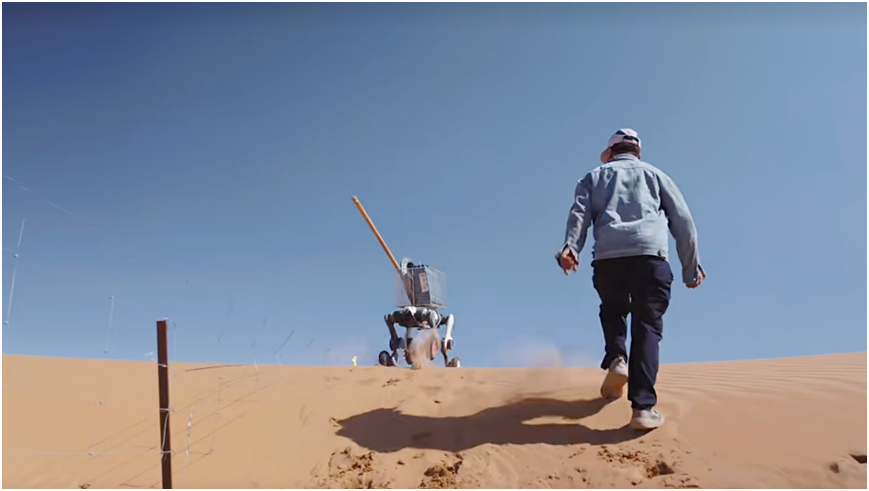
During field operations, the Lynx M20S demonstrated strong environmental adaptability. Its wheels moved smoothly across loose sand as it followed preset patrol routes, while its chassis remained stable on ground heated to 50°C. Even when strong winds drove sand against the machine, its IP67-rated protection prevented dust from entering the enclosure and disrupting operations.
The Lynx M20S can carry up to 35 kg of supplies, including tree markers, water bags, and replanting tools. Materials that once required rangers to make several trips can now be delivered to a work site in a single journey. The robot can also follow rangers through the plantation, keeping tools and supplies close at hand wherever they are needed. This makes management more precise and efficient while reducing the physical burden on frontline staff.
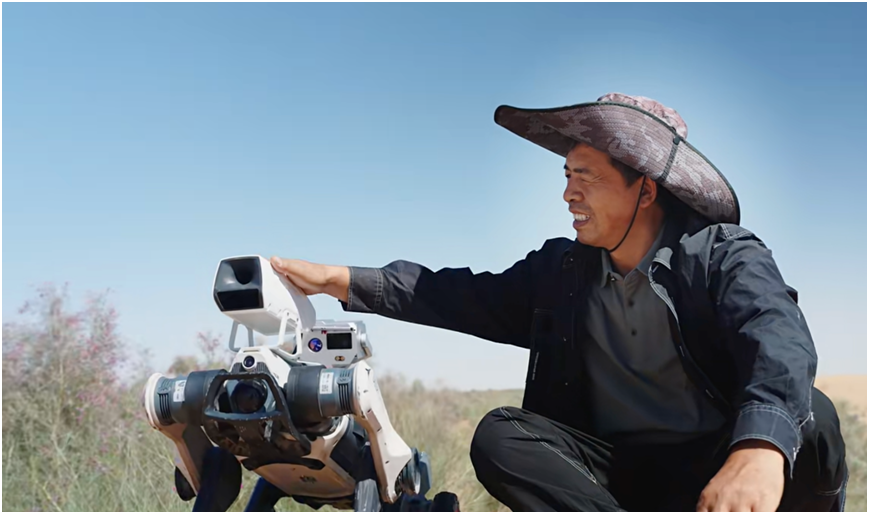
The robot also performs hazard inspections. Equipped with a dual-spectrum pan-tilt-zoom camera, the Lynx M20S can identify potential risks such as animal burrows, fallen vegetation, and damaged fencing. “It is much more convenient now-what used to take three days can be done in one,” said a ranger at the site. “The robot can promptly detect hazards and damage during patrols, allowing us to carry out repairs immediately and prevent further losses.” Because rangers no longer need to mark damaged locations and return on a separate trip, problems can be addressed sooner and forest losses reduced at the source.
“This Is the First Time I’ve Been Able to Monitor the Plantation at Night While Seated”
Nighttime protection has long been one of the weakest links in desert vegetation management. With limited manpower, rangers have struggled to cover the entire plantation after dark, while poor visibility creates blind spots that make inspection extremely difficult. When wild animals enter to graze on seedlings, conventional patrols often cannot detect or drive them away in time.
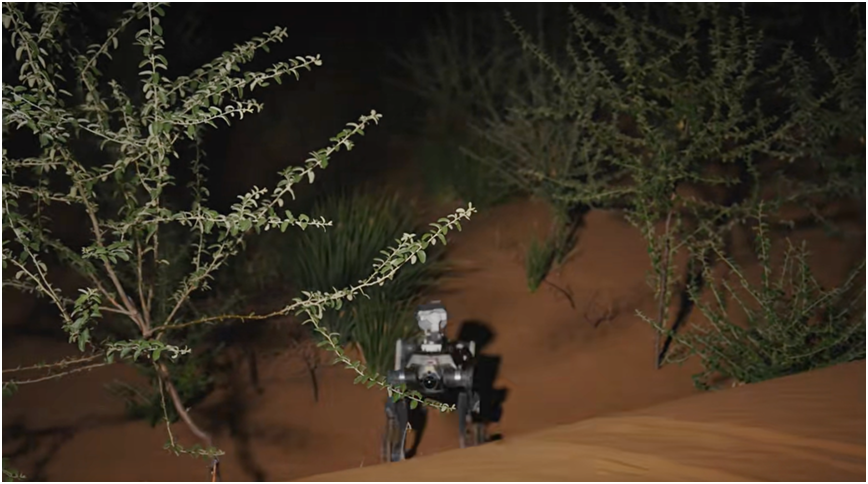
The Lynx M20S addresses this challenge by conducting routine patrols around the clock, creating an intelligent line of defense across the plantation. During nighttime patrols, its onboard thermal-imaging system can track wildlife activity in real time. If an animal approaches a key seedling area, the robot can use a high-powered loudspeaker to drive it away without causing harm, helping prevent damage to young plants. Video and operational data are transmitted simultaneously to a digital management platform, allowing rangers to monitor the plantation remotely.
“This is the first time I’ve been able to sit down and monitor the plantation at night,” said one ranger. “When small animals began feeding on the leaves, the robot quickly drove them away with its loudspeaker, effectively protecting the newly sprouted seedlings.” With continuous monitoring from the DEEP Robotics robot, the plantation is moving beyond a reactive model of repairing damage after it occurs and entering a new phase of early warning and proactive prevention.
From the Desert to the Wider World: Taking Technology Where It Is Needed Most
he deployment in the Tengger Desert was neither a technology showcase nor a staged demonstration. It was a practical field trial designed to address real operational needs. From wind farms in the scorching Gobi Desert of Ningxia to the −30°C snowfields of Yakeshi in Hulunbuir, and from the Serling Tso Nature Reserve at an altitude of 4,700 meters to Turpan-known as China’s “Land of Fire”-DEEP Robotics has consistently demonstrated that the value of embodied AI lies not only in the laboratory, but also on the front lines: in places that are difficult for people to reach and where technological support is needed most.
The Tengger Desert trial brought together the practical needs of frontline rangers and the challenges of an extreme desert environment, putting the Lynx M20S to the test under demanding real-world conditions. Robots are not intended to replace people, but to extend human capabilities. By taking on dangerous, strenuous, and repetitive tasks, they allow people to focus on the judgment and decision-making that humans do best, enabling more effective human-robot collaboration. In this desert field trial, DEEP Robotics used technology to help protect a fragile ecosystem, bringing advanced robotics to the people working on the front line. It is a vivid example of technology serving the public good.
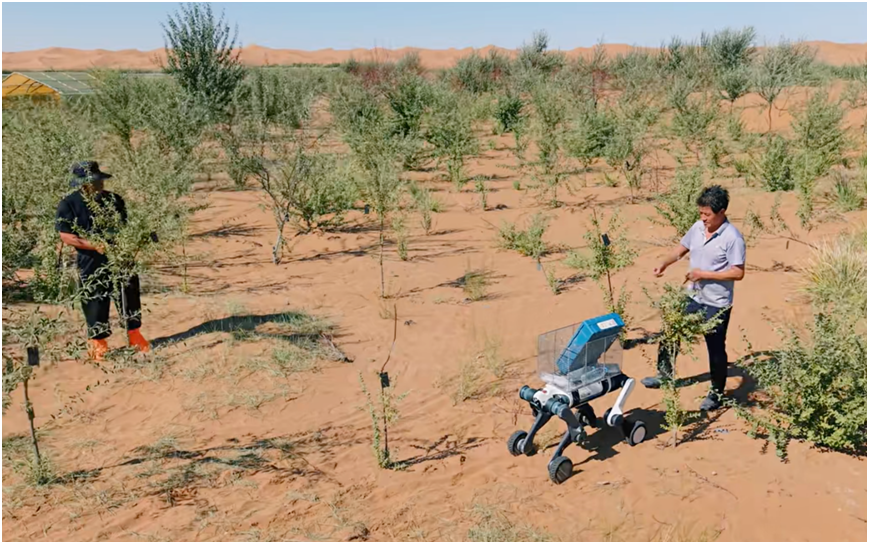
As the setting sun casts a warm golden glow across the dunes, the Hedysarumscoparium stands quietly amid the windblown sand. In the harsh landscape of the Tengger Desert, advanced technology now works alongside the dedication and perseverance of those fighting desertification. Technology should go where it is needed most-and the patches of green taking root across this sea of sand, supported by DEEP Robotics, deserve to be seen by the world.
Media Contact:
Company: DEEP Robotics
Contact: Vivian Chen
Email: chenlingjia@deeprobotics.cn
Website: https://www.deeprobotics.cn/en
SOURCE: DEEP Robotics
View the original press release on ACCESS Newswire


