
HVAC technicians in Hampstead, NC, discuss AC replacement, including signs it’s needed and its benefits.
Hampstead, United States – June 30, 2026 / Great Day Plumbing & Air /
Important AC Replacement Basics to Know
An air conditioner that once kept a home cool without complaint gradually becomes a source of frustration, and by the time the warning signs are impossible to ignore, the replacement case is usually already well established. AC replacement is a process that rewards those who approach it with the right information, because the decisions made during that process, from recognizing the signs early to choosing the system type carefully, shape how a home will feel and how much it will cost to keep comfortable for years to come. Walking through the key basics from start to finish makes the path forward much clearer and puts homeowners in a better position to work with an HVAC contractor who can bring the right solution to life.
Signs to Replace an Air Conditioner
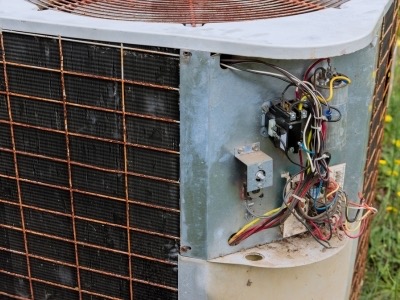 An air conditioner that has been in service for more than ten years is statistically near or past the point where age-related decline begins to outweigh the cost of keeping the system running, and the signs of that decline tend to surface in ways that feel minor at first before they become harder to overlook. A system that starts to slow down, takes longer to bring rooms to the desired temperature, or begins cycling more frequently than it used to is showing the classic patterns of a unit whose internal components have worn past the point of reliable performance. Those early signals are worth paying attention to, because they tend to escalate into bigger problems the longer they go unaddressed.
High energy bills are often the moment when homeowners first realize that their air conditioner has crossed the line from a comfort system into a liability, as an old and inefficient AC unit consumes more electricity steadily to deliver steadily less cooling. The efficiency of any HVAC system erodes over time as refrigerant levels fluctuate, coils accumulate buildup, and mechanical components lose the precision they had when the unit was new, and every one of those losses pushes operating costs higher. Monthly utility bills that have climbed without a corresponding change in usage habits or local energy rates are one of the clearest signs that the system itself is the source of the problem.
Frequent repairs add a third layer to the case for replacement, especially when the service history of a unit starts to read like a list of recurring issues that never quite resolve before the next one appears. Spending money on compressor work, refrigerant recharges, capacitor replacements, and coil cleanings on an aging unit can feel like maintenance, but it is often closer to spending good money to hold off an outcome that is already inevitable. A licensed HVAC technician reviewing the repair record of the current system can offer an honest assessment of whether continued investment is worth it or whether AC replacement is the smarter financial decision.
Advantages of Replacing an Old AC Unit
Improved energy efficiency is the benefit that tends to surprise homeowners most after a new air conditioner installation, because the contrast between what a modern high-efficiency system uses and what the old unit was consuming is often dramatic enough to show up clearly on the first utility bill of the cooling season. Current AC systems are built to meet energy standards that simply did not exist when many of the units being replaced were manufactured, and the result is a system that cools more effectively while putting far less demand on the electrical system.
Lower cooling costs become a reliable monthly benefit rather than a seasonal hope. Fewer repair costs are a natural extension of starting with new components under a manufacturer’s warranty, removing the cycle of service calls and parts expenses that tends to define the final years of an aging system’s life. Enhanced comfort is perhaps the benefit that homeowners feel most viscerally, since a properly sized and installed new system eliminates the hotspots, humidity swings, and inconsistent airflow that older equipment often leaves behind. Modern air conditioners also tend to operate far more quietly than the systems they replace, a quality-of-life improvement that becomes noticeable almost immediately after installation.
One of the less discussed but equally valuable advantages of AC replacement is the opportunity to resize the system if the existing unit was never the right match for the home’s square footage and layout. Oversized systems cool rooms too quickly without removing enough humidity, leaving spaces that feel cold but clammy, while undersized systems run nonstop and still fall short of the thermostat setting on the hottest days. A proper Manual J load calculation performed during the replacement process is the foundation for getting this right, and it is something a qualified HVAC contractor will prioritize before recommending a specific unit.
Choosing a Type of AC System
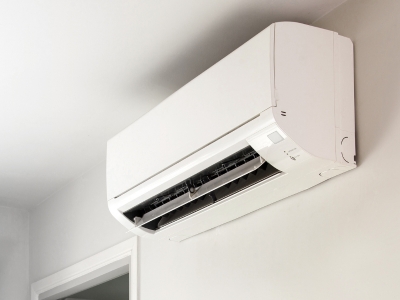 The choice between a ductless mini-split system and a central AC system is the defining question in most AC replacement projects, and it is a choice that comes with genuine trade-offs on both sides rather than a single right answer. Central air conditioning has the advantage of familiarity and, in homes that already have existing ductwork, a lower installation cost than the ductless alternative since the distribution infrastructure is already in place. The hidden vents and single exterior unit associated with central AC give the system an unobtrusive presence that requires no changes to the interior appearance of any room.
Where central AC tends to fall short is in operating costs, particularly in homes where duct leakage quietly bleeds efficiency by allowing conditioned air to escape into unconditioned spaces like attics and wall cavities before it ever reaches the living areas. Ductless mini-split systems address that problem by design, connecting an outdoor compressor directly to compact indoor air handlers mounted in each zone, delivering cooling without any duct losses and producing noticeably lower energy bills as a result. The absence of ductwork also makes mini-split installation the practical choice in homes where ducts do not exist, are in poor condition, or cannot be routed to certain areas without major construction.
Room-by-room temperature control is a feature that mini-split systems offer as a built-in capability, giving occupants the ability to set different temperatures in different areas of the home based on actual use rather than trying to satisfy everyone with a single thermostat setting. The upfront installation cost for a ductless system is typically higher than a central system in a home with usable existing ducts, making the decision a genuine calculation of short-term costs versus long-term operating savings. Reaching out to a licensed HVAC contractor for a full system evaluation is the step that brings all of those variables together and leads to a recommendation that is grounded in the realities of the specific home rather than a one-size-fits-all answer.
About Great Day Plumbing & Air
Great Day Plumbing & Air is a plumbing and air solutions company serving the Hampstead, NC, area and beyond. They offer straightforward pricing, same-day service, and the latest technology. Call them for air conditioning replacement and installation in Hampstead, NC.


Contact Information:
Great Day Plumbing & Air
14685 HWY 17
Hampstead, NC 28443
United States
Matt Hord
(910) 941-0080
https://www.callgreatday.com/


