AI in Recruitment: Smart Strategies for Responsible and Effective Use
Winter Park, United States – April 10, 2026 / Employment Technologies /
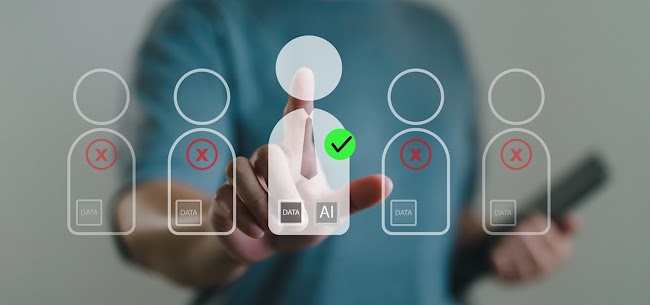
Artificial intelligence is rapidly becoming a central part of the hiring process. Organizations are increasingly turning to AI-based tools to screen candidates, streamline recruiting, and improve efficiency. According to a recent survey by Forbes, 65% of employers plan to use AI to screen out candidates.
While the promise of faster and more efficient hiring is appealing, many organizations are adopting AI screening tools without fully understanding best practices. In some cases, companies are implementing automated systems with little or no human oversight. That trend should give hiring leaders pause.
AI can be a powerful tool, but only if it is used thoughtfully and responsibly.
How Organizations Are Currently Using AI in Hiring
AI is already being used across multiple stages of the hiring process. According to the Forbes survey, organizations are applying AI in several key areas:
- Resume review – 83%
- Candidate assessment analysis – 69%
- Social media and personal website scans – 47%
- Chatbots communicating with candidates – 39%
- New hire onboarding – 36%
- Conducting interviews – 19%
These numbers demonstrate just how quickly AI has become embedded in talent acquisition.
However, the most common uses, resume reviews and application scans, also present some of the biggest risks when implemented incorrectly.
When Automation Eliminates the Wrong Candidates
Many organizations rely on AI-driven resume screening tools that search for specific keywords, degrees, certifications, or years of experience. While this approach can help recruiters manage large applicant pools, it can also unintentionally eliminate strong candidates.
Keyword searches and rigid experience requirements often fail to capture qualities that truly predict job success. Skills like adaptability, problem-solving, customer orientation, and communication ability rarely appear clearly in a resume.
As a result, organizations may be screening out high-potential candidates before they ever have a chance to demonstrate their abilities.
Some of the best hires are individuals who may not check every traditional box but have the capacity to quickly learn and perform. Overreliance on automated resume filters risks letting those “diamonds in the rough” slip away.
The Risk of Unintended Bias
Another concern with AI-driven hiring tools is the potential for unintended bias. Algorithms are only as objective as the data and instructions used to build them.
In fact, nearly all respondents in the Forbes survey agreed that AI always, often, or occasionally produces biased recommendations when evaluating candidates.
The potential sources of bias can include factors related to:
- Age
- Gender
- Socio-economic background
- Race or ethnicity
Without careful monitoring, AI systems may inadvertently replicate patterns that exist in historical hiring data. If past hiring decisions contained bias consciously or unconsciously, the algorithm may simply learn and repeat those same patterns.
This does not mean AI should be avoided in hiring. Rather, it highlights the importance of implementing these tools with proper safeguards and clear guidelines.
Best Practices for Responsible Use of AI in Hiring
AI can absolutely play a valuable role in improving hiring efficiency and consistency. However, organizations should follow several key guidelines to ensure those tools are used fairly and effectively.
Don’t Rely Solely on Resume Screening
Resume and application reviews should not be the primary method for eliminating candidates. Resumes provide only a limited snapshot of an individual’s potential. Incorporating job-related assessments or simulations can help evaluate skills that resumes cannot capture.
Ensure Assessments Are Highly Job Relevant
Any AI-supported assessments should be directly tied to the skills and behaviors required for success in the role. Job relevance is critical both for accuracy and for maintaining fairness in the selection process.
Clearly Define What You Are Measuring
Organizations should clearly identify the competencies, behaviors, or abilities the AI assessment is designed to measure. When measurement goals are vague, AI tools are more likely to produce inconsistent or misleading results.
Provide Specific Scoring Instructions
AI scoring systems should be given precise instructions on how responses should be evaluated. Including model responses or examples of strong answers can help ensure the system accurately interprets candidate responses and evaluates them consistently.
Keep Evaluation Criteria Objective
All scoring guidelines should be based on objective job-related factors. Avoid criteria that could introduce subjective interpretations or unintended bias.
Monitor for Potential Bias
Organizations should collect and analyze demographic data to identify whether certain groups of candidates are disproportionately screened out. Regular monitoring helps detect patterns that may indicate bias in the system.
Maintain Human Oversight
Perhaps most importantly, AI should support, not replace human decision-making. Final hiring decisions should always involve trained professionals who can review AI recommendations, apply sound judgment, and consider context that automated systems may miss.
Technology Should Support Better Hiring, Not Replace It
AI has the potential to significantly improve hiring processes by increasing efficiency, standardizing evaluations, and helping organizations manage large volumes of applicants. However, when these tools are implemented without proper safeguards, they can unintentionally eliminate strong candidates and reinforce bias.
The organizations that benefit most from AI in hiring will be those that treat it as a decision-support tool rather than a decision-maker.
By combining thoughtful AI implementation with strong human oversight, companies can create hiring processes that are efficient, accurate, and fair, while ensuring they don’t miss out on great talent.
Frequently Asked Questions (FAQ)
What are the basics of AI?
- Artificial Intelligence (AI) is a field of computer science focused on creating systems that can perform tasks typically requiring human intelligence, such as learning, reasoning, problem-solving, and decision-making.
- Algorithms are step-by-step sets of instructions or rules that a computer follows to solve a problem or complete a task.
- Big Data refers to extremely large and complex datasets that are analyzed to uncover patterns, trends, and insights.
- Machine Learning is a subset of AI that enables computers to learn from data and improve over time without being explicitly programmed.
- Natural Language Processing (NLP) enables AI systems to understand, interpret, and generate human language.
- AI systems rely on training data, and their performance depends heavily on the quality and fairness of that data.
How is AI used in talent acquisition and hiring?
AI tools are used to automate and improve parts of the recruitment process, such as resume screening, candidate sourcing, interview scheduling, and even initial assessments.
How does AI screen resumes?
AI-powered tools scan resumes for keywords, skills, experience, and qualifications that match a job description. They rank or filter candidates based on how closely their information aligns with the role.
Can AI introduce bias in hiring decisions?
Yes, AI can reflect or even amplify biases if it is trained on biased data. For example, if historical hiring data favored certain groups, AI may unintentionally replicate those patterns. That’s why companies must regularly audit and refine their AI systems to ensure fairness.
Does AI replace human recruiters?
No, AI is designed to assist, not replace, recruiters and HR personnel. While it can handle repetitive tasks and data analysis, humans are still essential for evaluating soft skills, cultural fit, and making final hiring decisions.
CHECK OUT THESE RELATED TOPICS
HOW TO IMPLEMENT ETHICAL, RESPONSIBLE, AND EFFECTIVE AI IN YOUR HIRING PROCESS
SHAPING TOMORROW’S HIRING EXPERIENCE
HOW TO BUILD A BETTER HIRING PROCESS


Contact Information:
Employment Technologies
532 S New York Ave
Winter Park, FL 32789
United States
Betty Conley
(407) 865-6644
https://employmenttechnologies.com


