Key Takeaways
- Sealed Gas Chambers: Closed-cell foam traps gas in tiny individual compartments, each one acting like a miniature shock absorber that spreads impact energy across a wider area.
- High Recovery Rate: Unlike open-cell alternatives, closed-cell foam quickly regains its original shape after compression, ensuring consistent protection through multiple handling stages.
- Surface Protection: The non-abrasive nature of Jiffy foam prevents “rub marks” and scratches, making it ideal for high-finish surfaces like polished wood, glass, and electronics.
- Environmental Compliance: PE foam is 100% recyclable (LDPE #4) and manufactured without ozone-depleting blowing agents, meeting current UK environmental standards.
- Scalable Protection: With thicknesses ranging from 1mm to 4mm, businesses can tailor their impact resistance to the specific weight and fragility of their products.
We’ve all been there: you open a delivery only to find what’s inside cracked, scratched, or shattered. When a fragile item takes a hit during transit, whether it survives comes down to one thing — how well the packaging absorbs and spreads that impact. That’s where closed-cell polyethylene (PE) foam has become the go-to choice for commercial and industrial shipping. The secret to its performance is not just the material itself, but the way its microscopic “cells” are constructed to behave as independent shock absorbers.
How Closed-Cell Foam Actually Works
At the molecular level, polyethylene foam is a cellular plastic. During manufacturing, gas is injected into molten polyethylene, creating millions of tiny bubbles. In “closed-cell” foam, these bubbles—or cells—are completely sealed off from one another. This is fundamentally different from open-cell foams (like those used in sponges or some furniture cushions), where the cells are interconnected and allow air to flow freely between them.
The sealed nature of these cells is what provides superior impact resistance. When a force is applied to the foam, the gas trapped inside each cell is compressed. Because the gas cannot escape into adjacent cells, it exerts outward pressure, resisting the compression. This creates a pneumatic effect: every individual cell acts like a tiny, gas-filled spring.
As an impact occurs, the kinetic energy is absorbed by these thousands of tiny “springs” and distributed across a much wider surface area. By spreading the load, the foam prevents the force from concentrating on a single point of the item being protected. This energy management is critical for preventing fractures in brittle items like glassware or preventing internal component failure in sensitive electronics.
Closed-Cell vs Open-Cell: What’s the Difference?
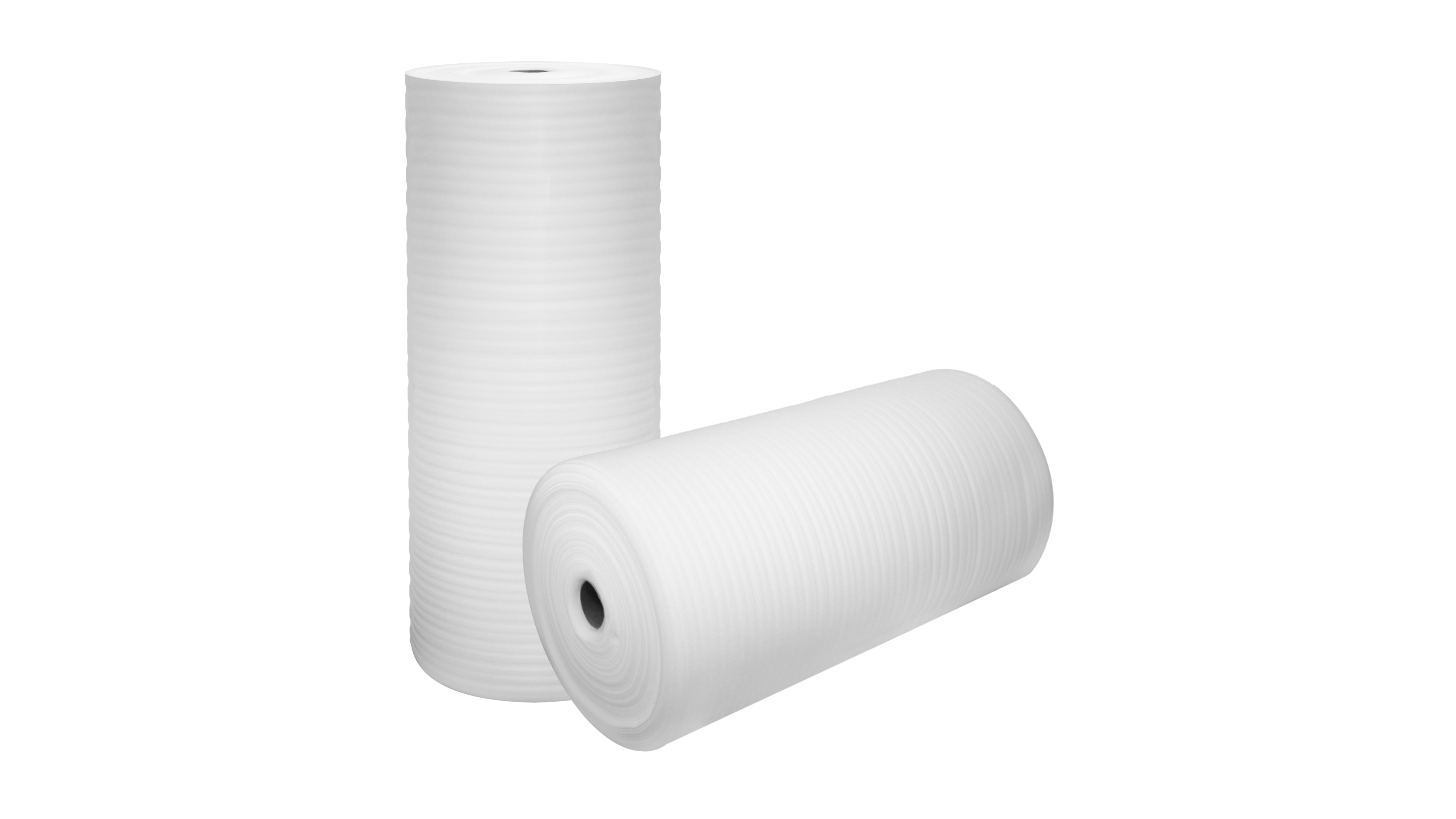
To understand why professional packaging solutions favour closed-cell structures, it is helpful to compare them to open-cell alternatives. In an open-cell foam, the “walls” of the cells are broken, allowing air to move through the material. While this makes the foam softer and better for sound absorption, it significantly reduces its effectiveness as a protective wrap.
- Compression and “Bottoming Out”: Under a heavy load or a high-velocity drop, open-cell foam can “bottom out” because the air moves out of the way. Once the air is displaced, the protection vanishes. In contrast, the trapped gas in a closed-cell foam roll provides a consistent level of resistance that prevents the product from ever making contact with the hard outer container.
- Structural Integrity: Closed-cell foam is inherently more rigid and durable. It can support heavier weights without collapsing, which is essential for “interleaving”—the process of placing foam sheets between stacked items like ceramic plates or glass panes.
- Long-Term Recovery: One of the most important metrics in packaging is “creep”—the tendency of a material to stay compressed over time. PE foam has excellent creep resistance. After an impact, the gas-filled cells quickly return to their original volume, meaning the packaging is just as effective for the second or third bump as it was for the first.
Non-Abrasive Surface Protection
Beyond impact resistance, there is the issue of surface integrity. Many protective materials, such as corrugated cardboard or even certain types of bubble wrap, can leave “pressure marks” or fine scratches on highly polished surfaces. This is a significant concern for manufacturers of automotive parts, high-end furniture, and consumer electronics.
Experts in protective solutions highlight that PE foam is naturally non-abrasive. The smooth, soft surface of the closed-cell structure does not “grip” or scratch delicate finishes. It creates a clean barrier that prevents dust and grit from being ground into the product’s surface during the vibrations of a long-haul journey. This “lint-free” and “dust-free” quality makes it particularly valuable in medical device packaging and the technology sector, where even microscopic contaminants can cause issues.
Moisture and Chemical Resistance
The closed-cell design offers a secondary benefit that is often overlooked: it is a near-perfect barrier against moisture. Because the cells are sealed, the foam cannot absorb water or other liquids. In an open-cell sponge, moisture is pulled into the material via capillary action, which can lead to mold, mildew, or the corrosion of metal components.
PE foam is also chemically inert, meaning it will not react with most acids, alkalis, or oils. This makes it an ideal choice for industrial environments where packages might be exposed to varying temperatures or chemical vapours. Whether a product is stored in a humid warehouse or shipped across varying climates, the closed-cell structure maintains its physical properties and protective capabilities.
Sustainability and Environmental Standards
In the modern market, the technical performance of packaging must be balanced with environmental responsibility. According to research from DS Smith, 22% of UK online shoppers would stop ordering from a brand if their packaging was not recyclable or was perceived as difficult to recycle. Furthermore, over 30% of consumers reported shopping less frequently with retailers after receiving damaged goods, highlighting the dual necessity of protection and sustainability.
Modern PE foam rolls address these concerns through both material choice and manufacturing compliance. The foam is produced from Low-Density Polyethylene (LDPE), which is classified as #4 plastic and is 100% recyclable. While it is often too bulky for standard kerbside collection in the UK, it is widely accepted at specialised recycling centres and supermarkets that process plastic films.
Additionally, industry-standard foam wraps are now manufactured without the use of CFC (Chlorofluorocarbon) or HCFC (Hydrochlorofluorocarbon) blowing agents. This ensures compliance with the UK’s Ozone-Depleting Substances Regulations 2015 and the subsequent 2019 amendments. By eliminating these chemicals, the manufacturing process avoids contributing to the depletion of the ozone layer, allowing businesses to use high-performance materials without compromising their corporate social responsibility (CSR) goals.
Selecting the Correct Thickness for Maximum Protection
Impact resistance is not a “one size fits all” calculation. The level of protection required depends on the weight, fragility, and value of the item. Packaging specialists generally recommend different thicknesses for different applications:
- 1mm Thickness: Ideal for surface protection and interleaving light items. It is frequently used for wrapping small glassware, electronics, and polished metal parts, where the primary goal is to prevent scratches.
- 1.5mm to 2.5mm Thickness: These mid-range options provide enhanced cushioning for medium-weight goods. They are commonly used in the transit of larger ceramics, medical instruments, and furniture components.
- 4mm Thickness: The most robust option for heavy-duty protection. This thickness is suited for items that are prone to damage from significant drops or those that require a thicker cushion to fill a void within a shipping box.
Because PE foam is mostly air (or gas), it adds negligible weight to a shipment. In an era of rising freight costs, being able to provide high-level impact resistance without increasing the shipping weight is a significant commercial benefit.
Why It Matters for Your Business
The science of closed-cell impact resistance demonstrates that effective packaging is about more than just “padding.” It is about engineering a material that can manage energy, resist environmental degradation, and protect the aesthetic finish of a product—all while remaining environmentally viable.
By understanding the microscopic mechanics of gas-filled chambers and the macroscopic benefits of non-abrasive PE foam, businesses can make more informed decisions about their supply chain security.
Whether protecting a delicate heirloom or a high-value industrial component, the tiny shock absorbers within a closed-cell PE foam roll ensure that products arrive in the same condition they left the factory. For further information on integrating these high-performance materials into a commercial operation, seeking the advice of packaging material specialists is a recommended next step for any logistics or warehouse manager.
Globe Packaging
Unit 5, Caxton Trading Estate
Hayes
Middlesex
UB3 1AP
United Kingdom