

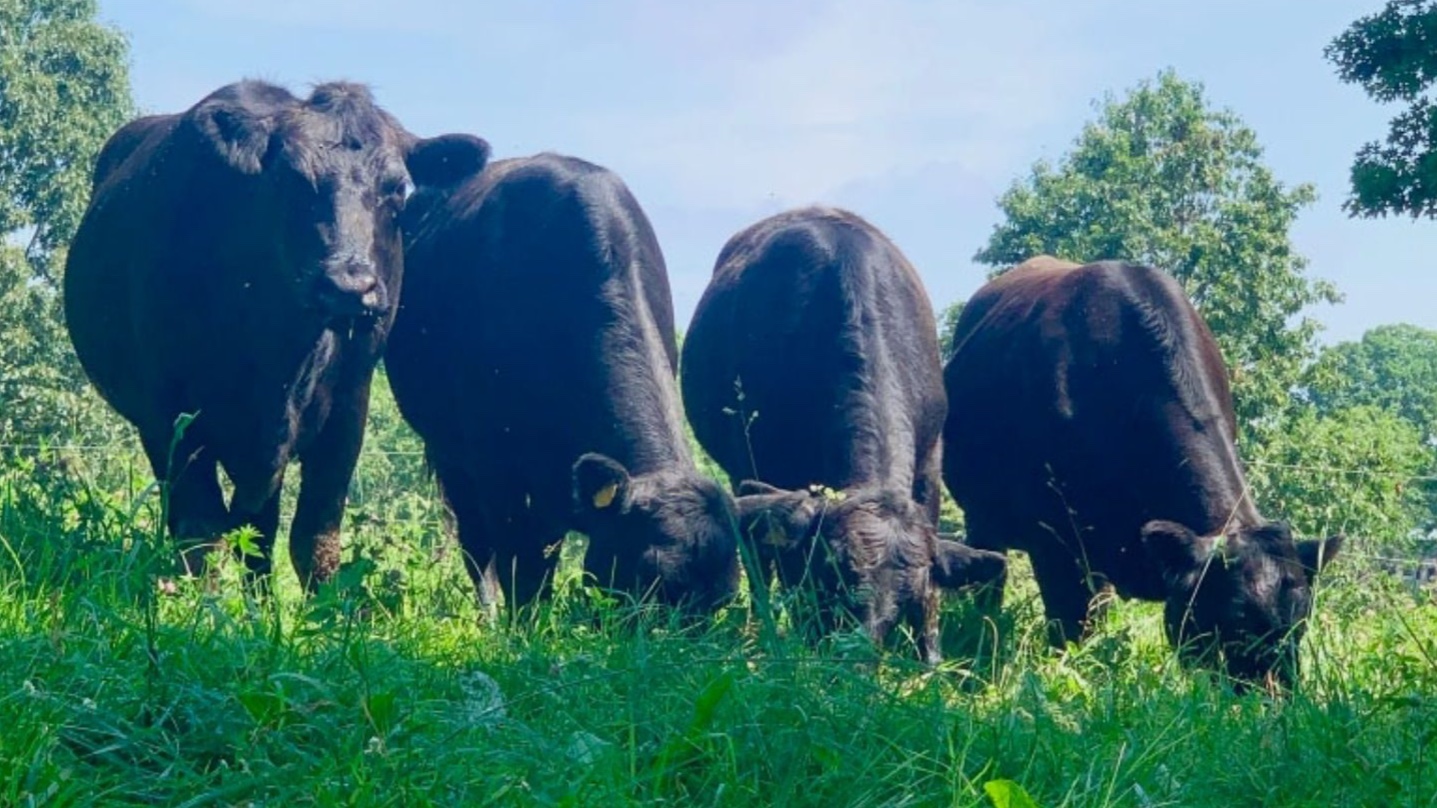
How to Tell If Grass-Fed Beef Is Really Grass-Finished: 4 Questions to Ask
Blog summary (37 words): A “grass-fed” label can still mean grain-finished beef. This guide explains what the finishing period is, why the USDA dropped its grass-fed standard in 2016, and four questions to ask any seller before paying extra for beef.
A package of ground beef says “grass-fed.” The price is higher than the store brand next to it. Most people assume the cow spent its life on pasture. Sometimes it did. Sometimes it ate grain in a feedlot for its last few months, and the label is still technically accurate.
So before paying extra, it helps to know what the word on the package does and doesn’t promise. Nobody needs a nutrition degree for this. A few pointed questions at the counter or the farm stand will usually do it.
Key Takeaways
- Label check: “grass-fed” by itself can still mean grain at the end.
- No referee: the USDA withdrew its voluntary grass-fed standard in January 2016.
- The part that matters: the finishing period, the months right before processing.
- No seal isn’t a red flag. Audits cost a small farm money every year.
- Ask first: what did the animal eat at the end?
What “Grass-Fed” Actually Covers
Calves start out on milk and pasture. That’s as true for a feedlot steer as for one that stays on grass its whole life. It’s why beef from a corn-finished animal can say “grass-fed” without lying. The label just stops talking before the story ends.
“Grass-finished” fills in the rest. It means the animal kept eating a forage-based diet, either pasture or stored grass such as hay and haylage, all the way through the finishing period. If a label stops at “grass-fed,” it leaves that last stretch unanswered.
Freedom Valley Farm, a family farm in White Hall, Maryland, wrote a detailed explainer on this exact point. Its guide to grass-fed vs. grass-finished beef walks through the label history and the questions buyers can ask.
Why No Agency Settles It
For a time, the USDA did have a federal marketing claim standard for “grass (forage) fed” beef. In January 2016, the Agricultural Marketing Service withdrew it. According to the agency’s Federal Register notice, AMS concluded it did not have the authority to define and verify these claims.
Label claims now fall to the Food Safety and Inspection Service. FSIS says a claim has to be truthful and can’t mislead, and it looks at labels one at a time. There’s no written yardstick every producer has to meet. A shopper standing in the meat aisle has no federal rule telling them what “grass-fed” means on that particular package.
What “Finishing” Means
South Dakota State University Extension describes finishing as the diet and management during the final phase of an animal’s life, when it puts on most of its final weight. Two animals can have nearly identical early lives and become different products depending on how that phase goes.
A grass-finished animal stays on pasture, or on hay through the winter, when a feedlot animal would be switching to grain. It grows more slowly that way, so it takes longer to reach finishing weight. The beef that comes out of it is usually leaner, and the fat looks and tastes different from grain-finished beef.
Does the Finishing Diet Change the Meat?
Published research says it does. A 2010 review in Nutrition Journal compared fatty acids and antioxidants in grass-fed and grain-fed beef. It reported that grass-based diets raised conjugated linoleic acid (CLA) and omega-3 content. It also found a different mix of saturated fats, plus higher levels of vitamin A and E precursors.
Nobody should read that as a health claim. These statements have not been evaluated by the FDA. Beef is not intended to diagnose, treat, cure, or prevent any disease. The takeaway is narrower. Change what a steer eats at the end and its fat changes too, and that alone makes the question worth asking.
4 Questions to Ask Before You Buy
Since no federal standard does the checking, the questions below do most of the work. They apply at a grocery store, a farmers market, or a farm pickup.
1. Does the label say “grass-fed” or “grass-fed and grass-finished”?
This is the fastest check. If only the first phrase appears, ask what the animal ate during its last few months. A clear answer is a good sign. A vague one is worth noting.
2. Will the seller say where the animal was raised and finished?
A farm can describe its own pasture or name the partner farms it buys from. A brand that sources from unnamed suppliers often can’t. Knowing where finishing happened is the only way to judge the claim.
3. Is there a certification, and if not, why not?
American Grassfed Association, Certified Humane and USDA Organic programs involve audits and annual fees. A seal means a farm paid to have its claim checked, which counts for something. Plenty of small farms skip certification for cost reasons and will still answer any question about their animals. Neither answer rules a farm out. Refusing to answer is the bigger concern.
4. Do the website and the package say the same thing?
Say a farm’s website talks about cattle on pasture year-round, and the package only says “grass-fed.” That’s worth a quick email. Sellers who are careful with the claim tend to use the same words everywhere.
What a Straight Answer Looks Like
Freedom Valley Farm offers a useful example of how a seller can answer these questions. The farm raises pastured pork and chicken on its Maryland land. Its beef comes from partner farms in Pennsylvania, and every partner farm is required to finish cattle on grass with no grain. The farm describes that beef as “100% grass-fed and grass-finished” every time, rather than “grass-fed” alone. Its 100% grass-fed beef page lists what it currently offers.
The farm does not hold a grass-fed or organic certification and says so openly. Instead, it invites customers to ask directly.
“‘Grass-fed’ on its own doesn’t tell you what the animal ate at the end,” said Ryan Hamby of Freedom Valley Farm. “A farm should be upfront about that gap instead of letting a label do the talking.”
That approach, naming the sourcing and answering questions in detail, is what to look for from any seller. Readers can learn more about the family behind Freedom Valley Farm and how the farm got started.
The Short Version
“Grass-fed” and “grass-finished” are two different claims, and no federal rule makes a label spell out the difference. A better label won’t solve that. A seller who will explain what the animal ate from start to finish will. Before paying for grass-finished beef, ask the four questions above and see how the answers hold up.
Freedom Valley Farm
+1 443 752 4338
2523 Bradenbaugh Road
White Hall
Maryland
21161
United States