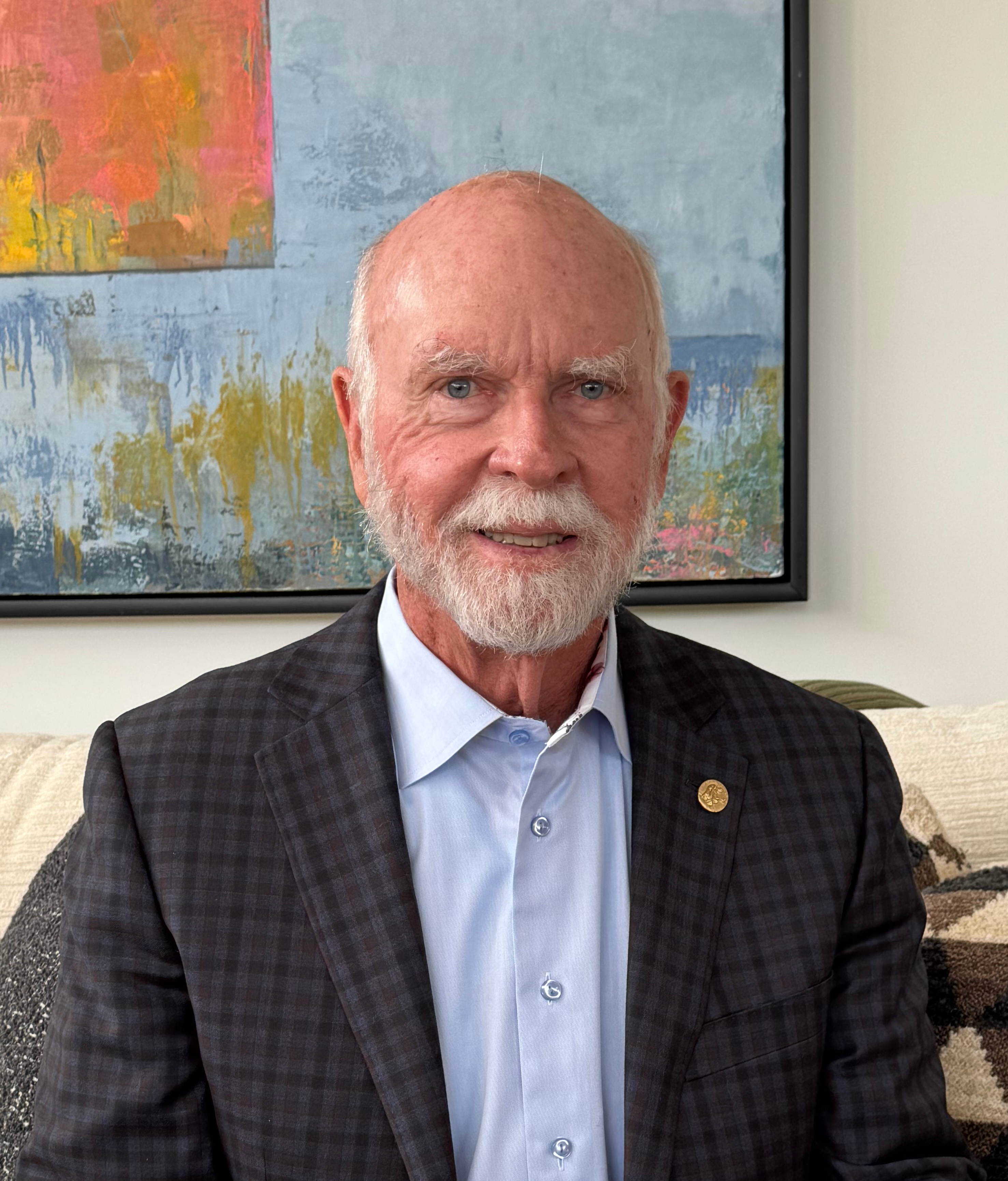
Researchers demonstrate a practical approach for generating high-quality genome assemblies at scale
SAN DIEGO, CA, UNITED STATES, October 28, 2026 /EINPresswire.com/ — Nearly 25 years after J. Craig Venter, Ph.D., and his team helped publish one of the first draft sequences of the human genome, researchers have returned to his DNA to produce a near-complete picture of his genetic blueprint. Called HuRef2.0, the new version shows how dramatically scientists’ ability to read and piece together human DNA has advanced.
The study, led by researchers at The Centre for Applied Genomics (TCAG) at The Hospital for Sick Children (SickKids) in Toronto, with J. Craig Venter Institute founder J. Craig Venter as a co-author, was published in the Proceedings of the National Academy of Sciences. The study builds on a collaboration between JCVI and SickKids dating back to the original HuRef genome, published in 2007. The team developed a streamlined workflow using technology from Oxford Nanopore that reads long stretches of DNA. Those longer pieces helped researchers reconstruct individual chromosomes with far fewer breaks than was possible when Venter’s genome was first assembled.
The human genome contains two sets of chromosomes, with one inherited from each parent. Most genome sequencing looks for differences between a person’s DNA and a standard reference genome. Reconstructing a personal genome instead involves piecing together the DNA itself and working out which differences belong to each inherited copy. This helps researchers see genetic changes in context rather than as isolated differences.
HuRef2.0 moves substantially closer to reconstructing those chromosomes continuously from one end, or telomere, to the other. The final assembly consists of 24 gapless chromosome sequences, covering all of Venter’s chromosomes, including both the X and Y sex chromosomes, with very high accuracy in the DNA sequence. It is not yet a fully resolved reconstruction of both inherited chromosome sets, and some highly repetitive regions remain difficult to reconstruct reliably. The team used standard high-quality DNA from a blood sample, avoiding the specially prepared extra-long DNA and combination of sequencing and mapping technologies commonly used to produce telomere-to-telomere assemblies.
“The approach we developed produces an assembly nearing the long-sought goal of a complete genome for approximately $1,000 and sets the stage for scaling this type of sequencing in clinical settings,” said Stephen Scherer, Ph.D., D.Sc., chief of research at SickKids and professor at the University of Toronto. “It was a particular honor to collaborate with Craig on this project. He helped create the discipline of decoding genomes and understood its potential to transform medicine and biology.”
One genome across three eras of sequencing
HuRef2.0 marks the third major effort to reconstruct Venter’s DNA, offering a rare opportunity to see how our view of one person’s genome has changed with each generation of sequencing technology.
In 2001, Venter and the Celera Genomics team published one of the first draft human genome sequences. It combined DNA from five individuals, with approximately 60% of the sequence data coming from Venter. Like the publicly funded draft published at the same time, it provided a foundation for understanding the human genome but was not the complete genome of a single person.
In 2007, researchers at JCVI, working with collaborators at SickKids and the University of California San Diego, removed the other donors’ DNA contributions and added new data using the sequencing technology of the time. The result, named HuRef, was the first published genome assembly of one individual to account for both inherited chromosome sets—a diploid genome.
HuRef showed that people differ genetically much more than earlier estimates had suggested. It revealed that larger changes in DNA, including stretches that are added, missing, repeated, or rearranged, contribute far more to human genetic variation than scientists had previously recognized.
The original HuRef was still a fragmented picture, containing more than 30,000 separate pieces of DNA sequence. The initial HuRef2.0 assembly brought that down to just 26 pieces; closing two remaining gaps produced sequences spanning all of Venter’s chromosomes. Researchers could also identify much longer stretches of DNA as belonging to the same inherited chromosome copy—an improvement of more than 20-fold over the original HuRef.
These longer, more continuous sequences give researchers a clearer view of medically important regions that older approaches struggled to piece together. The team examined a complex region involved in immune function, portions of the Y chromosome, and a region of chromosome 22 where missing or extra DNA can cause medical conditions. Some regions could be reconstructed more fully than others.
The study also showed that different ways of analyzing a genome can reveal different genetic changes. No single method found every potentially medically relevant difference identified by the researchers. The findings support continued work to reconstruct both inherited chromosome copies more completely and compare personal genomes directly.
A continuing pursuit of personalized medicine
Venter saw reading the genome as a starting point for medicine tailored to each person. His goal was to combine increasingly complete DNA sequences with information about a person’s biology, health, and environment to better assess disease risk, detect illness earlier, and guide treatment.
That goal helped lead Venter to co-found Human Longevity Inc., where researchers combined whole-genome sequencing with medical imaging, laboratory tests, and other detailed health measurements. The idea was to connect what DNA might reveal about future health with measurements of what is happening in the body now.
More recently, Venter co-founded Diploid Genomics Inc. (DGI), a company spun out of JCVI. It is developing an approach that combines telomere-to-telomere phased diploid genome sequencing—reconstructing both inherited chromosome sets from end to end and distinguishing the DNA inherited from each parent—with advanced imaging, medical information, and computer analysis. Its goal is to turn that fuller picture into information researchers, clinicians, and patients can use.
DGI reflects Venter’s approach of pairing nonprofit discovery with commercial development to bring research advances into medical practice.
HuRef2.0 advances that larger goal by showing a simpler way to reconstruct near-complete personal genomes that may be practical to use in larger studies. Research building on the genome and the collaboration that produced it continues, with the aim of better understanding how cells use genetic information and what it means for health.
The study is among the final scientific papers co-authored by Venter, who died April 29, 2026. His work on HuRef2.0 continued into his final days, as he examined the data and discussed the findings with his collaborators.
“At our last meeting in Toronto, Craig was challenging the team with questions that went directly to the study design, interpretation, and presentation of the data,” Scherer said. “He always believed scientists should stay close to the data, regardless of how senior they became. He followed that advice himself to the very end.”
The work brings Venter’s pursuit full circle: from helping produce one of the first drafts of the human genome to helping develop a more complete picture of his own—a step toward making similarly detailed personal genomes more widely available.
The paper, “The revised diploid genome sequence of an individual human: A workflow for near telomere-to-telomere assemblies using only Oxford Nanopore Technologies Simplex-reads,” is available in PNAS.
About the J. Craig Venter Institute
The J. Craig Venter Institute (JCVI) is a not-for-profit research institute in San Diego, California, and Rockville, Maryland, dedicated to the advancement of the science of genomics; the understanding of its implications for society; and communication of those results to the scientific community, the public, and policymakers. Founded by J. Craig Venter, Ph.D., JCVI is home to approximately 120 scientists and staff with expertise in synthetic biology, human and evolutionary biology, genetics, bioinformatics/informatics, information technology, high-throughput DNA sequencing, genomic and environmental policy research, and public education in science and science policy. JCVI is a 501(c)(3) organization. For additional information, please visit www.jcvi.org.
Matthew LaPointe
J. Craig Venter Institute
+1 301-795-7918
Visit us on social media:
LinkedIn
Bluesky
Instagram
Facebook
YouTube
Other
Legal Disclaimer:
EIN Presswire provides this news content “as is” without warranty of any kind. We do not accept any responsibility or liability
for the accuracy, content, images, videos, licenses, completeness, legality, or reliability of the information contained in this
article. If you have any complaints or copyright issues related to this article, kindly contact the author above.

Media gallery