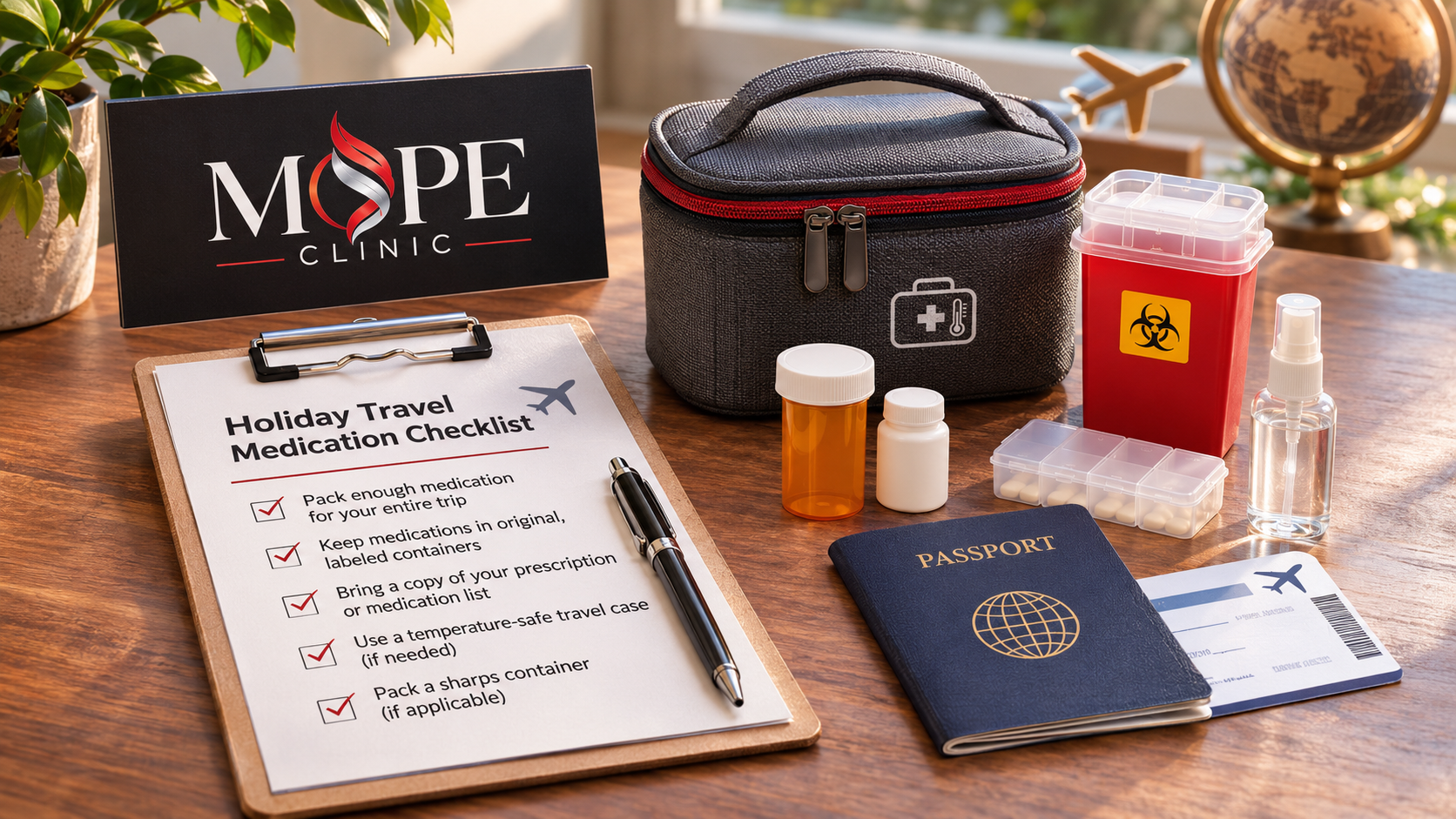

Metairie clinic highlights prescription storage, airport screening, missed-dose precautions, and safe medication handling during holiday travel.
METAIRIE, LA, UNITED STATES, November 23, 2026 /EINPresswire.com/ — # MOPE Clinic Offers Holiday Prescription Medication Travel Safety Tips for Louisiana Residents
With Thanksgiving travel underway and Christmas trips approaching, MOPE Clinic in Metairie has prepared holiday medication-safety information to help Louisiana residents understand common challenges associated with transporting prescription medications, maintaining treatment schedules, and managing medical supplies away from home.
Holiday travel can disrupt familiar routines, especially for individuals who depend on prescription medications that require specific storage conditions or regular administration. Extended highway trips, crowded airports, unfamiliar accommodations, changing mealtimes, and unexpected delays may create additional challenges. By preparing ahead of time, travelers can reduce avoidable disruptions and better understand when to contact their pharmacist or prescribing healthcare professional.
The clinic’s educational recommendations emphasize advance preparation, medication storage, airport security requirements, safe needle disposal, and maintaining prescribed treatment schedules. These precautions are especially relevant during the busy holiday season, when many Greater New Orleans and South Louisiana residents travel to visit family and friends.
## Why Medication Planning Matters During Holiday Travel
Prescription medications have different requirements for storage, handling, administration, and missed doses. Some must remain refrigerated, while others can tolerate limited periods at room temperature. The instructions for oral medications may also differ from those for injectable treatments or medications requiring specialized equipment.
The Centers for Disease Control and Prevention recommends that international travelers keep prescription medicines in their original, labeled containers and prepare necessary medical documentation. The CDC also encourages travelers to prepare a travel health kit containing prescription medications and other essential medical supplies. These recommendations can help travelers manage their health needs when familiar pharmacies and healthcare services are not readily available.
For Louisiana residents, medication planning may be useful whether departing through Louis Armstrong New Orleans International Airport, driving to another Southern state, or taking an extended family vacation. Travel distances, vehicle temperatures, and unfamiliar overnight accommodations can all affect medication management.
## Preparing a Prescription Medication Travel Kit
A dedicated medication travel kit can help travelers keep important supplies organized and accessible. Before departure, patients should review their prescription instructions, confirm that they have enough medication for the planned trip, and account for reasonable travel delays. Travelers who expect to need a refill should contact their pharmacy in advance rather than assuming that medication will be available at their destination.
Keeping medications in their original, properly labeled packaging is particularly important when traveling internationally or carrying medical supplies through airports. Prescription labels provide useful identification information, while pharmacy contact details can help answer questions if medication is lost, damaged, or delayed.
Individuals who use injectable medications should also confirm that they have the correct needles, syringes, pen supplies, or other administration equipment. Depending on the prescription, a suitable insulated carrier and portable sharps container may also be necessary. Placing these items together in a dedicated travel bag can simplify packing and help prevent forgotten supplies.
A practical preparation method involves creating a written checklist several days before departure. The checklist can identify each medication, its required storage conditions, the next scheduled dose, necessary equipment, and contact information for the prescribing professional. Reviewing the list again before leaving home may prevent common last-minute problems.
## Protecting Temperature-Sensitive Medication During Travel
Temperature control is an important consideration for people traveling with certain prescription medications. Some injectable products require refrigeration, while others have specific allowances for limited storage at room temperature. These instructions vary by medication, formulation, and delivery device, making it essential to follow the directions supplied with the exact prescription.
A vehicle parked in direct sunlight can become too warm for temperature-sensitive products, even when outdoor temperatures feel comfortable. Similarly, direct contact with frozen ice packs or exposure to freezing weather may damage certain medications. Travelers should not assume that an ordinary cooler or hotel refrigerator automatically maintains the correct temperature range.
Patients can ask their pharmacist whether a temperature-controlled travel carrier is appropriate and how cooling materials should be positioned. When refrigeration is required, the carrier should be used according to the medication manufacturer’s instructions and any additional guidance from the dispensing pharmacy.
If a medication becomes frozen, overheated, or remains outside its recommended temperature range, professional advice should be obtained before further use. The medication’s appearance alone may not reliably indicate whether storage problems have affected its quality.
## Navigating Airport Security With Prescription Medication
Air travelers should review current Transportation Security Administration requirements before leaving for the airport, particularly when carrying injectable prescriptions, medically necessary liquids, or medication cooling supplies. Prescription medications and necessary medical equipment are generally permitted through U.S. airport security, although additional screening may apply.
Keeping essential medication in carry-on luggage can provide access during long flights, unexpected delays, or baggage problems. Travelers may also find it helpful to organize prescriptions and related equipment together, allowing security personnel to inspect the supplies more easily when necessary.
International travel requires additional preparation. Some countries restrict certain medications or require supporting documentation even when those medications have been legally prescribed in the United States. The CDC advises travelers to review destination-country requirements before departure and avoid assuming that familiar medications will be available abroad.
For residents departing from Metairie, New Orleans, Kenner, or surrounding communities, checking medication and airport requirements before traveling can reduce complications during an already busy holiday period.
## Safe Needle Disposal Away From Home
Travelers who use injectable medications should make arrangements for the safe disposal of used needles, syringes, and other medical sharps. Improper disposal creates a risk of accidental needlestick injuries for hotel employees, transportation workers, waste handlers, and members of the public.
The U.S. Food and Drug Administration recommends placing used sharps immediately into an appropriate sharps disposal container. Portable containers can make this process more convenient for travelers, particularly when spending several days away from home.
Used needles should never be left loose in hotel wastebaskets, airplane seat pockets, vehicle compartments, or ordinary public trash containers. They also should not be placed loose in recycling bins. Travelers should check applicable local disposal requirements and ask about appropriate disposal locations when necessary.
Planning for sharps disposal before departure is a simple precaution that supports personal safety and protects others who may encounter improperly discarded medical equipment.
## Maintaining Medication Schedules During Holiday Travel
Holiday gatherings, late-night drives, flight delays, and changes in time zones can interfere with normal medication routines. However, prescription schedules should not be changed simply because holiday plans become inconvenient.
Instructions for missed doses vary significantly among medications. Some prescriptions allow a missed dose within a specified period, while others require skipping that dose or obtaining professional guidance before restarting treatment. These instructions are not interchangeable, even when medications are used for similar health conditions.
Patients should review their prescription labeling before traveling and contact their prescribing clinician or pharmacist when scheduling changes are anticipated. Taking extra medication to compensate for a missed dose or restarting a treatment incorrectly may increase the risk of adverse effects.
Setting phone reminders, maintaining a written medication schedule, and keeping prescription instructions accessible can help travelers stay organized. For individuals crossing time zones, professional guidance may be especially useful when precise medication timing is important.
## Holiday Meals, Hydration, and Medication Safety
Thanksgiving and Christmas celebrations frequently involve different eating patterns, larger meals, rich foods, and changes in normal hydration habits. These adjustments may be uncomfortable or medically important for individuals taking certain prescriptions or managing chronic health conditions.
Travelers should continue following any dietary instructions associated with their medications and medical conditions. Eating regular meals when clinically appropriate, maintaining suitable hydration, and avoiding unplanned changes to prescribed treatment may help reduce avoidable problems.
Individuals managing diabetes or other conditions requiring blood-glucose monitoring should continue using their prescribed monitoring equipment and follow their individualized medical instructions. Necessary supplies should remain accessible during travel rather than being packed in difficult-to-reach luggage.
Alcohol consumption may also affect hydration, blood-glucose management, or medication tolerance. Patients should discuss potential interactions with their healthcare professionals when appropriate.
## Frequently Asked Questions About Holiday Medication Travel
**Can prescription medications be carried through airport security?**
Generally, yes. Prescription medications, medically necessary liquids, and related medical supplies are permitted through U.S. airport security, subject to screening procedures. Travelers should check current TSA requirements before departure, especially when carrying injectable medication or cooling equipment.
**Should prescription medications be packed in checked luggage or carry-on luggage?**
Keeping essential medications in carry-on luggage is generally recommended because checked bags may be delayed, misplaced, or exposed to unsuitable storage conditions. Travelers should follow applicable security rules and keep necessary medical supplies accessible.
**Can refrigerated medication be transported in an ordinary cooler?**
Not every cooler maintains a suitable temperature. The correct method depends on the medication’s approved storage range and handling instructions. A pharmacist can help determine whether an insulated carrier or another temperature-control method is appropriate.
**What happens if medication becomes too warm during a road trip?**
The answer depends on the medication, temperature, and length of exposure. Travelers should contact their pharmacist or prescribing healthcare professional before using medication that may have been stored outside its recommended conditions.
**Is it safe to place injectable medication directly against frozen ice packs?**
Direct contact with frozen cooling materials may expose certain medications to damaging temperatures. Travelers should use an appropriate carrier and follow pharmacy guidance about cooling methods and separation from ice packs.
**What if a prescription dose is missed while traveling?**
Missed-dose instructions vary among medications. Patients should consult the directions provided with their prescription and contact a healthcare professional when necessary. Taking two doses together or changing the schedule without appropriate guidance may be unsafe.
**Can travelers bring needles and syringes on an airplane?**
Medically necessary injection supplies are generally permitted through airport security, subject to applicable screening requirements. Keeping supplies organized with the corresponding medication may help simplify inspection.
**How should used needles be handled in hotels?**
Used needles and other sharps should be placed immediately into an appropriate sharps disposal container. They should never be left loose in hotel trash, public waste containers, or recycling bins.
**What if medication is lost during a trip?**
Travelers should contact their pharmacy or prescribing healthcare professional as soon as possible. Replacement options depend on the specific medication, prescription requirements, location, and applicable regulations. International travelers may encounter additional restrictions.
**Should medication schedules change when crossing time zones?**
Some medications require carefully timed administration, while others offer more scheduling flexibility. Patients should review their prescription instructions and ask their healthcare professional how time-zone changes may affect their treatment.
**What should someone do if vomiting or illness interferes with taking medication?**
Patients should seek individualized guidance from an appropriate healthcare professional, particularly when illness affects hydration or prevents normal medication use. Severe symptoms, persistent vomiting, or signs of dehydration may require urgent medical evaluation.
**Can travelers make a medication checklist before leaving home?**
Yes. A written checklist can include medication names, prescription instructions, storage requirements, scheduled doses, necessary equipment, and pharmacy contact information. Checking these details before departure can make holiday travel more organized.
## Greater New Orleans Residents Encouraged to Prepare Before Departure
As families across Metairie, New Orleans, Kenner, the Northshore, and surrounding South Louisiana communities prepare for holiday travel, advance medication planning remains an important part of personal healthcare.
MOPE Clinic emphasizes individualized medical evaluation, patient education, and appropriate follow-up. Medication requirements differ by prescription and patient, and travelers should rely on their own healthcare professionals for treatment-specific instructions.
Additional public information about prescription-medication travel, medical supplies, and safe sharps disposal is available through the Centers for Disease Control and Prevention and the U.S. Food and Drug Administration.
Related educational information is available through MOPE Clinic’s *Traveling With GLP-1 Medication: Storage, Missed Doses & Holiday Tips* resource.
## About MOPE Clinic
MOPE Clinic, formally Metairie Optimal Performance Enhancement, is a cash-pay concierge medical practice located in Metairie, Louisiana. Led by Chris Rue, FNP-C, the clinic provides individualized healthcare services involving hormone optimization, medical weight management, and related areas of care.
The practice serves Greater New Orleans and patients throughout South Louisiana. Concierge visits are available by appointment only.
Gwen M.
Designs For You
Visit us on social media:
Facebook
Legal Disclaimer:
EIN Presswire provides this news content “as is” without warranty of any kind. We do not accept any responsibility or liability
for the accuracy, content, images, videos, licenses, completeness, legality, or reliability of the information contained in this
article. If you have any complaints or copyright issues related to this article, kindly contact the author above.

Media gallery